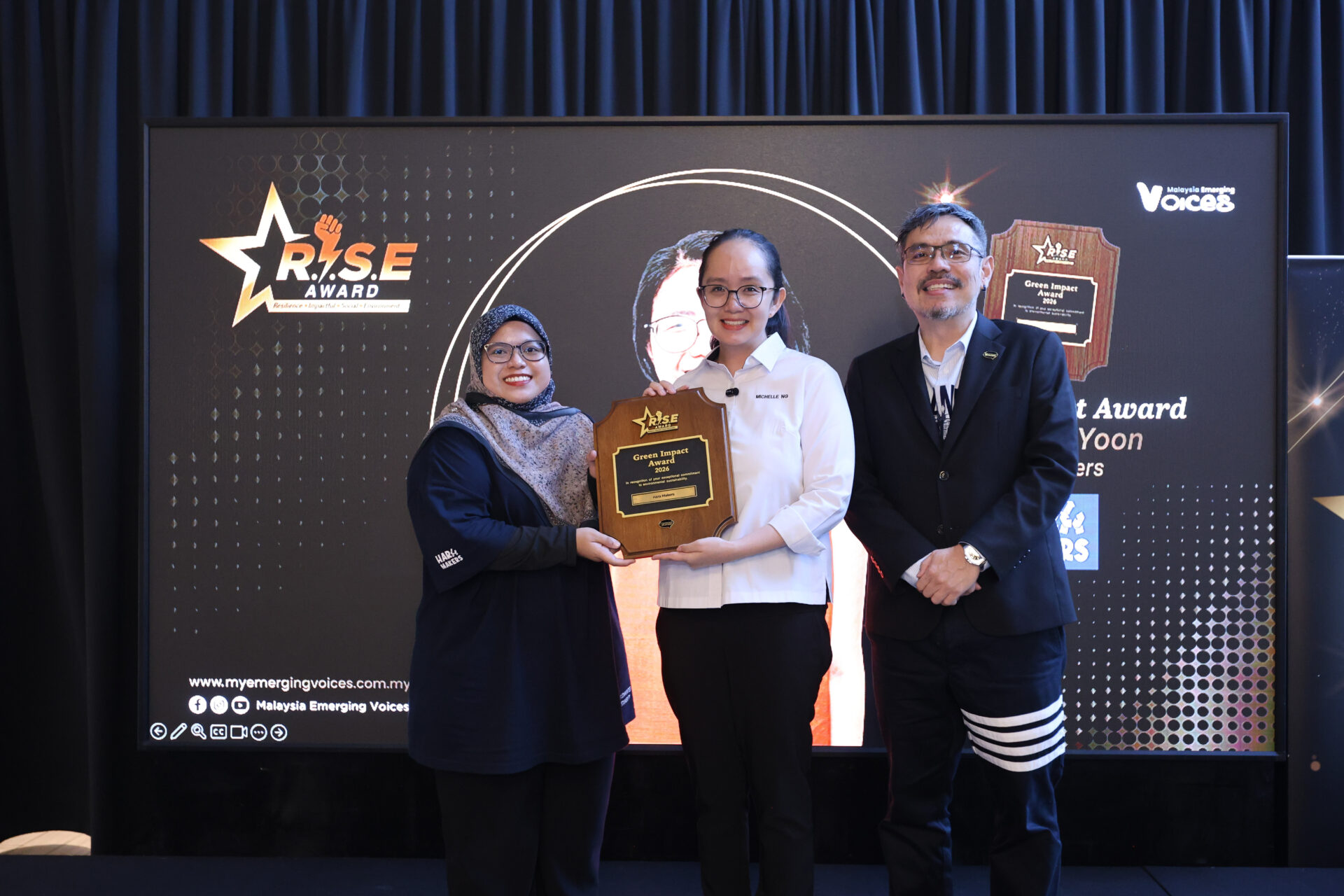
Some Stories Begin in a Landfill
Imagine picking up a discarded bread tag from the ground.
Most people would walk past it without another thought.
Someone else might toss it into the nearest rubbish bin.
At Hara Makers, that tiny piece of plastic could eventually become part of a flower pot sitting on someone’s balcony.
More importantly, it could become part of someone’s livelihood.
That simple transformation captures everything Hara Makers stands for. Since its founding, the Malaysian social enterprise has challenged one of society’s biggest assumptions—that waste is worthless. Instead, it has shown that discarded materials can create not only beautiful products, but also meaningful employment, stronger communities and new beginnings for people who are often overlooked (The Star, 2022).
Hara Makers was never established simply to recycle plastic. It was built around a much bigger question: What if solving an environmental problem could also solve a social one? (Options, 2025; The Interview, 2025a).

The Question That Changed Everything
Long before Hara Makers became known for colourful upcycled products, its founders were volunteering with Kedai Jalanan, serving meals to Kuala Lumpur’s unhoused community (Options, 2025).
Week after week, they met the same individuals.
The meals helped.
The conversations mattered.
Yet something felt incomplete.
After every volunteering session, the same question lingered:
What happens tomorrow?
Food could ease hunger for a day.
But it could not provide stable income, rebuild confidence or create long-term independence.
Instead of asking how they could donate more, the founders began asking something entirely different:
How could they create opportunities instead of dependence? (Options, 2025)
That question eventually became Hara Makers.
Rather than treating environmental sustainability and social welfare as separate challenges, the organisation combined them into one solution. Plastic waste became raw material. Training became empowerment. Products became income. Every recycled item represented an opportunity for someone to rebuild their future (The Interview, 2025b).
Turning Plastic into Possibility

To most people, used plastic bags, coffee sachets and bread tags have reached the end of their journey.
For Hara Makers, they are only beginning.
Collected plastic is cleaned, sorted and transformed into colourful lifestyle products including tote bags, pouches, coasters and flower pots (The Star, 2022).
But the products themselves are only half the story.
Behind every item is someone learning new skills.
Someone earning a fair income.
Someone discovering confidence through meaningful work.
Over the years, Hara Makers has partnered with refugee communities, women from B40 households and individuals experiencing homelessness, providing vocational training that allows participants to contribute according to their strengths while earning sustainable
livelihoods (The Star, 2022; Wiki Impact, n.d.).
As the organisation grew, so did its belief that sustainability should never exclude people.
Instead, it should create opportunities for everyone.
Cleaning Rivers, Changing Mindsets

Eventually, Hara Makers realised that creating products from waste addressed only one part of a much larger problem.
The waste had to be collected first.
This inspired the organisation’s regular river clean-up initiatives, where volunteers step into polluted waterways to remove rubbish while witnessing the environmental consequences of everyday consumption firsthand (Options, 2025).
The experience is intentionally confronting.
Volunteers discover plastic bottles trapped beneath riverbanks.
Household waste tangled among tree roots.
Objects people never imagined would end up in nature.
These clean-up programmes are not designed simply to remove rubbish.
They are designed to change behaviour.
By experiencing pollution firsthand, participants begin asking different questions about what they buy, how they consume and where their waste ultimately ends up (Options, 2025).
That educational mission has expanded further through workshops with schools, universities and corporate partners, introducing thousands of participants to circular economy principles and practical upcycling techniques (The Interview, 2025a.; Sin Chew, 2025).
A Future Where Nothing Is Wasted
Today, Hara Makers has become far more than a social enterprise.
It is a reminder that solving one problem can sometimes solve another.
Plastic waste becomes useful products.
Communities gain meaningful employment.
Volunteers become environmental advocates.
Consumers begin seeing waste differently.
Looking at one of Hara Makers‘ colourful creations, it is easy to admire its craftsmanship.
What is less visible is everything that happened before it reached the shelf—the discarded plastic collected from the environment, the hands that carefully transformed it and the lives strengthened throughout the process.
Perhaps that is Hara Makers’ greatest achievement.
It has shown that the most valuable thing created from waste is not a bag, a coaster or a flower pot.
It is hope.
Because when waste is given a second chance, people often are too.
Article Repost from Malaysia Emerging Voices